The Next Differentiation Layer in Mobile: Immersive Experiences


For more than a decade, the smartphone has been the most widely adopted computing device in history — and its influence continues to expand. Today, there are more than 6.8 billion smartphone users globally, according to GSMA. Mobile devices account for well over half of global internet traffic, and in many markets, they are the primary — and sometimes only — way people access digital content.
The behaviors concentrated on mobile are not marginal. Mobile gaming now generates more than half of global gaming revenue (Newzoo). Social platforms report that the vast majority of content creation happens on handheld devices. Video communication, once occasional, is now embedded into work, education, telehealth, and daily life. The smartphone is not just a screen. It is the main interface for communication, entertainment, and expression on a global scale.
At SPIE Photonics West earlier this year, Jason Hartlove spoke about the industry’s focus on reaching the first 100 million users of AI display glasses — framing it not simply as a hardware milestone, but as a shift in how people experience technology. His point underscored something broader: immersive computing will scale as the experience layer evolves, not just as new devices ship. Immersive experiences serve as the bridge – translating spatial intelligence from cloud and server infrastructure into embedded platforms, paving the way toward AR adoption. And the most immediate path to that scale sits in the devices already in billions of hands.
Today’s smartphones are technically capable of far more than the experiences they currently deliver. Dedicated AI engines are now embedded directly into mobile chipsets, enabling real-time on-device inference rather than cloud dependence. Displays have evolved beyond simple resolution upgrades; they are brighter, more power-efficient, capable of higher refresh rates, and increasingly optimized dynamic content. 5G coverage has expanded rapidly, reducing latency and enabling richer media experiences without buffering or delay. From a capability standpoint, today’s flagship smartphones rival the computational power of laptops from just a few years ago.
And yet, despite these advances, the visual paradigm has barely shifted. Most mobile experiences — whether scrolling social feeds, joining a video call, or playing a game — are still rendered on a flat layer. The underlying hardware has transformed. The experience model has not.
Meanwhile, immersive and mobile AR markets are projected to grow at roughly 30% annually through the end of the decade. That growth is not driven solely by experimental hardware categories. It reflects a broader shift in expectation. As AI becomes increasingly multimodal and visual, and as users spend more time inside image- and video-first environments, there is a clear movement toward interaction that feels more spatial and more natural.
For OEMs operating in a mature handset market — where shipment growth is incremental, and replacement cycles continue to extend — this evolution carries strategic weight. Competing on specifications alone has diminishing returns. Faster processors, brighter screens, and improved battery life remain essential, but they are no longer sufficient as standalone differentiators. The competitive advantage increasingly lies in how effectively those technical capabilities translate into perceptible experience.
Three behaviors already dominate mobile engagement: social media, video communication, and gaming. Enhancing these use cases with spatial depth is not about introducing a new hardware category or asking consumers to change behavior. It is about evolving the experiential layer of the device billions of people already rely on every day — and unlocking value from infrastructure that already exists within the silicon and display stack.
Social Media: Moving Beyond Camera Specs

Camera innovation has defined smartphone competition for years. Sensor size, image processing, and AI-enhanced editing have all contributed to meaningful improvements in capture quality. Across premium tiers, however, performance gaps have narrowed, and visual output has become increasingly comparable.
The next layer of opportunity sits in how content is rendered and experienced on device. Spatial rendering at the platform level allows content to feel layered rather than compressed. Subjects separate more naturally from their environments; motion carries visual hierarchy, and feeds gain dimensional presence.
For OEMs, this creates a new narrative around visual leadership. Rendering innovation lives in silicon, display, and software stack, extending value beyond optics alone. It also creates strategic alignment with social platforms that continuously optimize engagement quality and session depth. Devices capable of presenting content with spatial fidelity offer a perceptible improvement in how media is consumed, shared, and experienced.
Video Communication: Restoring Presence on Mobile
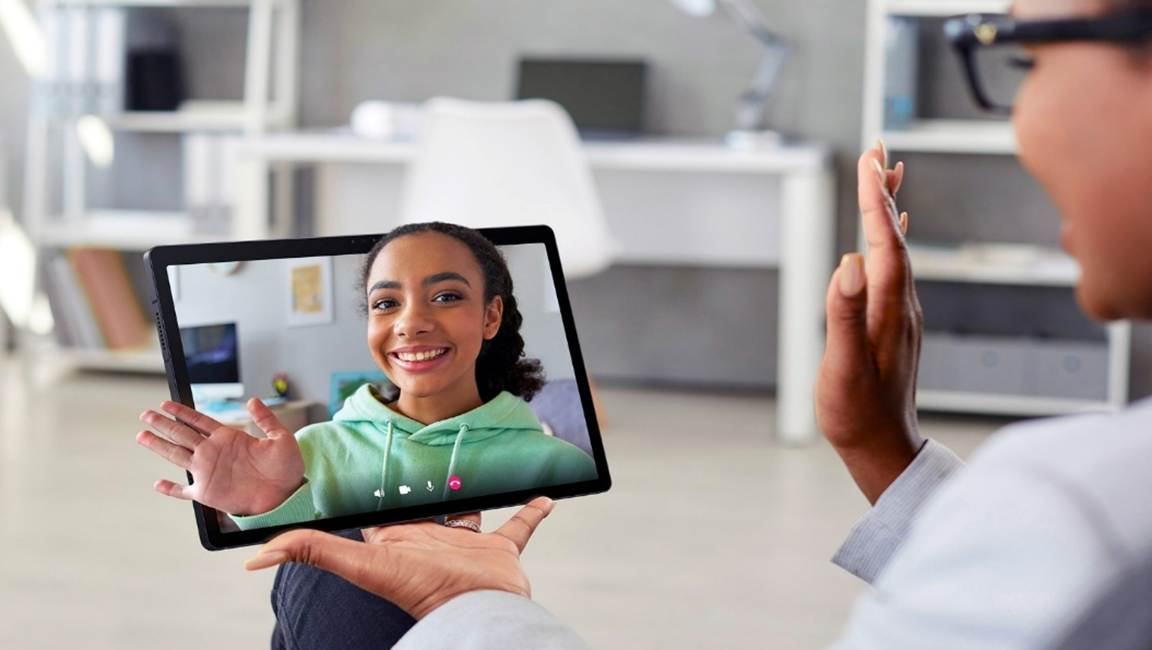
Video communication has graduated from a convenience feature to a core mode of professional and personal interaction. Platforms such as Microsoft Teams and Zoom now report daily participation in hundreds of millions, with mobile among the fastest-growing endpoints. In enterprise settings, Teams alone accounted for more than 270 million monthly active users in recent reporting, and Zoom continues to grow both in corporate and hybrid learning environments. Mobile usage for these platforms is not marginal — it is integral to how people collaborate beyond the traditional office desk.
Device roadmaps have long treated video calls as a convergence of camera quality, network performance, and audio clarity. These remain foundational. However, interaction quality — how natural and fatigue-free a call feels — is shaped by more than technical bandwidth and pixel count.
Human perception leverages depth cues to interpret attention, eye contact, and spatial orientation. When these cues are supported visually, the cognitive load of sustained interaction decreases and perceived presence increases.
Many users report that long video sessions, especially on smaller screens, lead to visual fatigue and a sense of flattening interaction — even when the connection and resolution are strong. Integrating spatial depth into the native video rendering pipeline addresses this at a perceptual level. Participants appear more grounded within the frame; facial features and gestures convey contextual weight more intuitively, and interaction feels less compressed.
For OEMs targeting productivity, enterprise mobility, and premium collaboration experiences, this represents a meaningful enhancement. As Teams, Zoom, and other communication platforms continue to refine AI-powered capabilities such as real-time transcription, background intelligence, and contextual automation, pairing those features with richer visual rendering strengthens the overall experience in a way users can immediately perceive. Devices that elevate presence, not just signal quality, deliver a differentiated communication experience that aligns with how people work and connect.
Mobile Gaming: From Performance Metrics to Experiential Performance
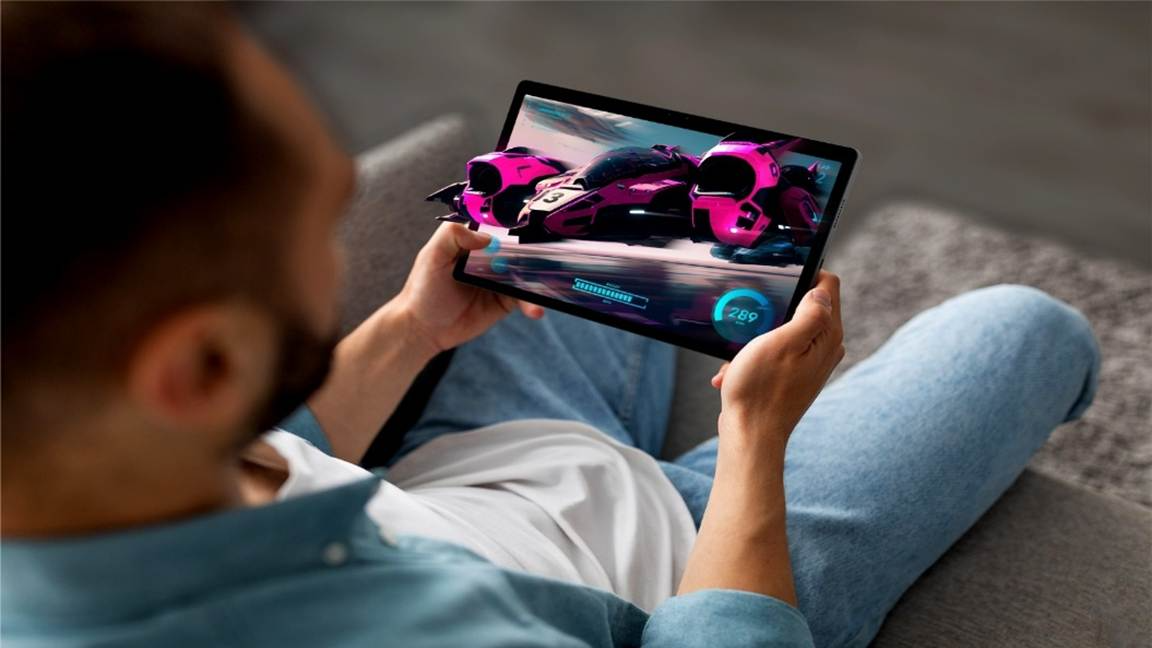
Mobile gaming has matured into the largest segment of interactive entertainment globally, accounting for more than half of total gaming revenue (NewZoo). But within that dominance, the category is diversified. Casual titles still drive broad engagement, while more demanding, competitive, and narrative-rich experiences — often on larger screens — are driving longer sessions and higher monetization.
Tablets have become a significant part of this trend, bridging the gap between handheld convenience and console-like immersion. In markets such as Southeast Asia and North America, tablet gaming sessions are frequently longer and more engagement-intensive than on smartphones, particularly for AAA-style titles and cloud gaming services.
As device makers design for this next generation of play, traditional performance metrics — GPU throughput, thermal efficiency, refresh rates — remain important. They are the foundations that allow titles to run smoothly and responsively. But rendering quality and interaction design are becoming equally strategic. Players today expect environments that feel spatially coherent, with depth that reflects the world being depicted, a scene they can step into, rather than a flat projection of it.
Spatial rendering introduces perceptual depth without requiring external hardware, enabling environments to feel more substantive and interfaces to feel less cramped — an especially valuable attribute on tablet displays where screen real estate is part of the competitive advantage. Characters, terrain, and UI elements occupy perceptual space in a way that aligns more closely with how users interpret physical environments, strengthening immersion even when gameplay remains touch driven.
For OEMs, this opens another dimension of differentiation beyond traditional performance metrics. Devices that balance performance with dimensional rendering support not just higher frame rates, but experiences that feel more engaging and satisfying — particularly on tablet form factors where immersive presence is more noticeable. As cloud gaming, subscription ecosystems, and cross-platform titles continue to grow, this becomes part of the value equation for players choosing between devices. Making immersion a first-class design principle on mobile and tablet platforms opens an opportunity to define the next wave of gaming differentiation at scale.
Why This Matters Now — And Why It’s Relevant at MWC
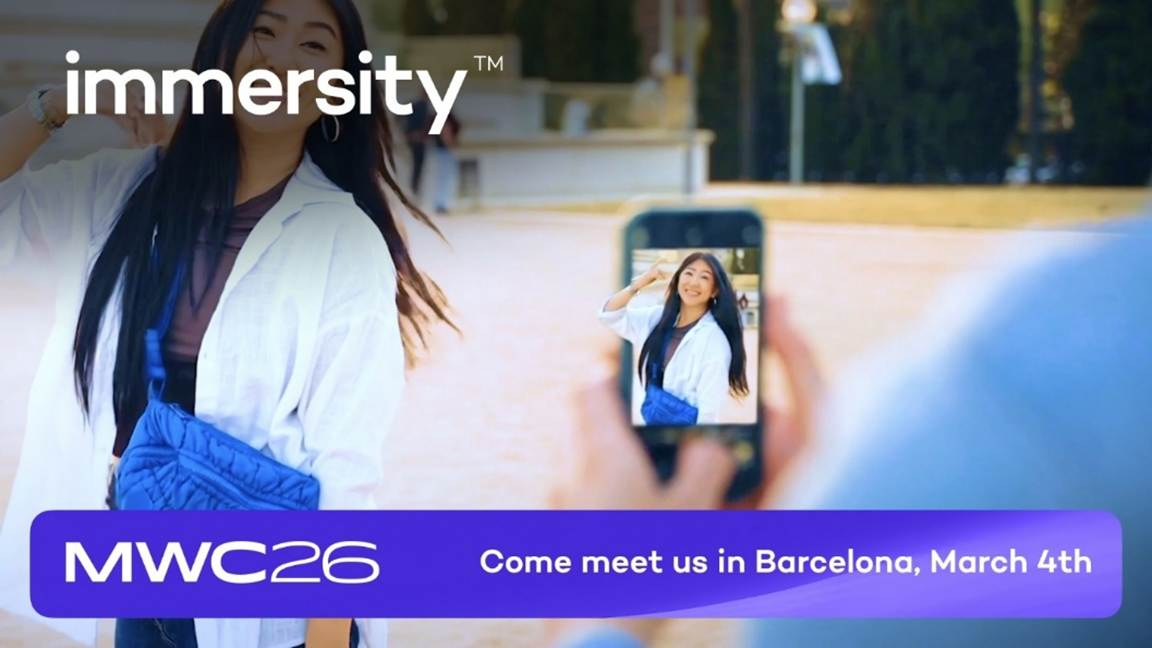
At Mobile World Congress, the conversation will center on AI integration, next-generation connectivity, silicon advances, and device innovation. Those foundations matter. What increasingly defines a competitive advantage, however, is how those technologies translate into perceptible user experience.
For OEMs, the strategic decision is already emerging; immersive capability will scale either through adjacent device categories — or through direct integration into mass-market mobile products. The embedded path allows immersive experiences to reach billions of users without requiring new behaviors or entirely new hardware ecosystems.
Immersity is focused on that embedded approach. By integrating Spatial AI and Switchable-Display capabilities directly into mobile devices, immersive rendering becomes part of the native experience — enhancing social content, elevating video communication, and expanding gameplay immersion at scale.
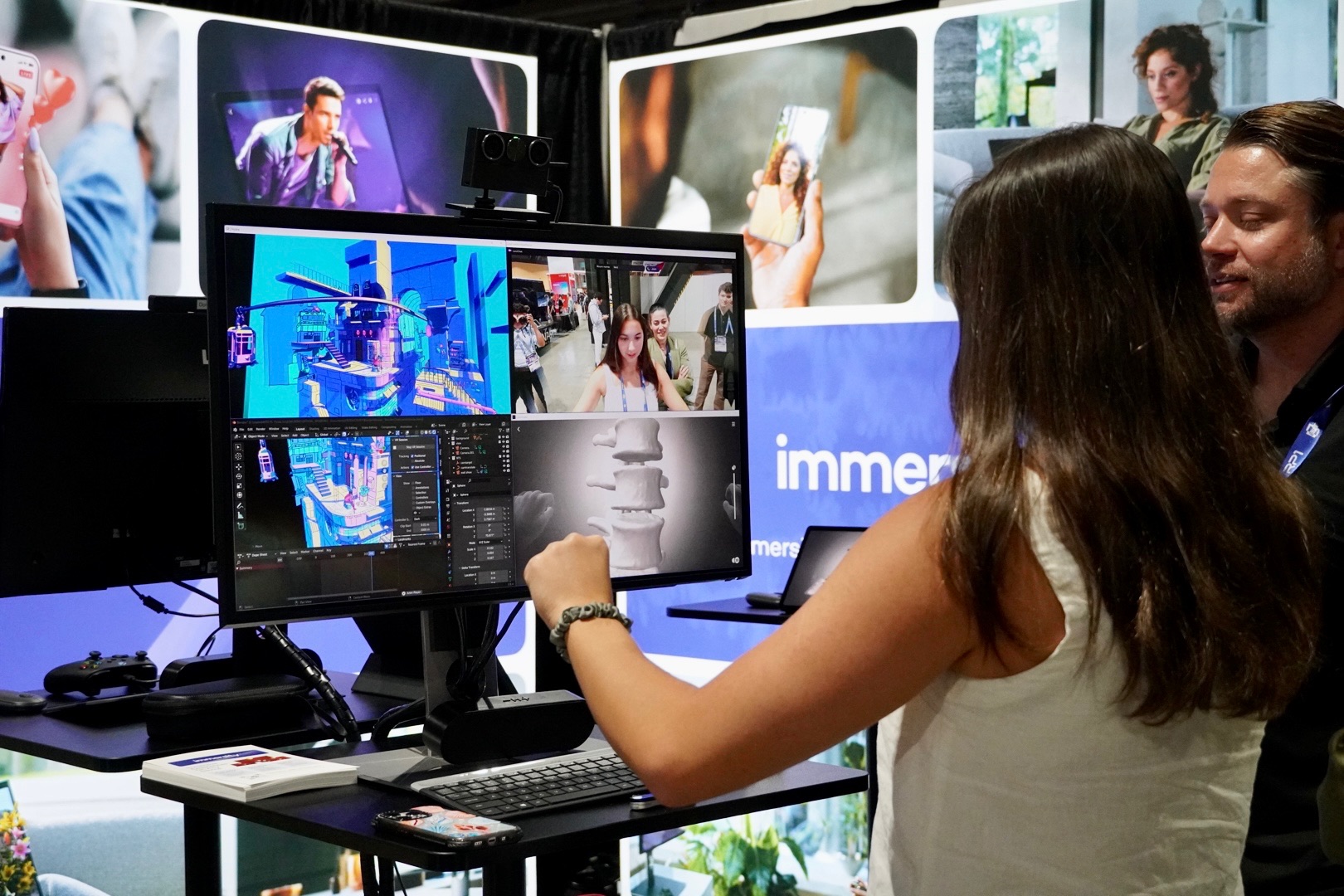
At MWC Barcelona, we will be demonstrating how immersive capability can be integrated into existing mobile roadmaps without increasing hardware complexity or disrupting established user workflows. For product leaders, innovation teams, and ecosystem partners evaluating their next differentiation layer, this is a practical conversation — not a speculative one.
If you are attending MWC and exploring how to move beyond incremental specification upgrades toward experience-driven differentiation, we invite you to meet with us in Barcelona.
You can schedule a demo or connect with our team here: https://immersity.ai/event-mwc26
Mobile is already the platform. The opportunity now is to define how it is experienced.
Keep Reading
View All


뉴스레터 가입하기
최신 뉴스와 업데이트를 확인하세요.