Leia and Morphotonics Complete Aurora 1100 Installation to Scale Immersity Cell Production

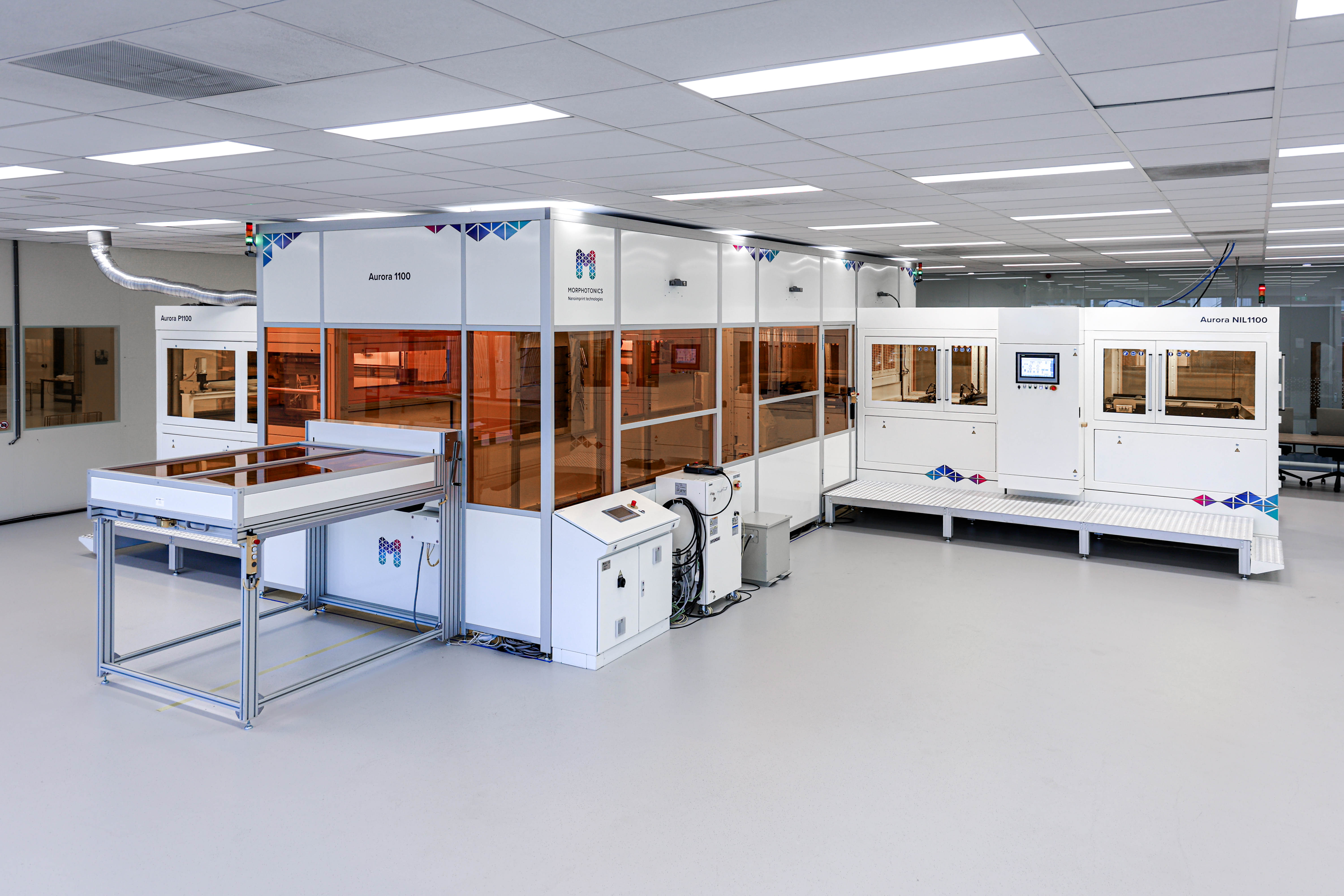
Leia Inc x Morphotonics - Aurora 1100 Installation
MENLO PARK, Calif. — December 10, 2025 — Leia Inc. and Morphotonics have completed installation and qualification of the Aurora 1100 Platform, marking a major step forward in the industrialization of immersive displays for any device. Aurora is the first fully automated Gen-5 roll-to-plate nanoimprint lithography line, providing Leia the production scale and consistency needed to support the next wave of OEM demand.
This installation represents the third generation of Morphotonics equipment brought into Leia’s manufacturing ecosystem – a clear sign of the long-term partnership and the shared belief of nanoimprint to operate at display scale, not just the industry standard wafer scale. What began in 2017 as a collaboration to solve a wafer-to-glass challenge has now matured into a complete industrial platform capable of producing immersive optical layers for millions of devices.
With Aurora in place, Leia can manufacture immersity Cells – the switchable liquid-crystal layer that powers its immersive displays – with higher precision, shorter cycle times, and greater reliability than ever before. Yields are already above 90%; cycle times are approaching two minutes, and the system supports flex lifetimes well beyond a thousand imprints. For OEMs, this means a stable, automated supply chain built for scale, capable of producing up to ten million mobile-size Immersity Cells per year and more than a million IT-side displays.
Beyond the numbers, Aurora signals a transition from scaling a new display technology to fully industrializing it. For the first time, nano-precision optical structures can be manufactured on Gen-5 glass with the same expectations placed on any other display component. This unlocks a roadmap that extends across mobile, tablet, laptop, and monitor categories, and sets the stage for future innovations such a OLED-compatible Immersity Cells, local 3D zones, integrated touch, and advanced optical materials.
For Morphotonics, Aurora demonstrates that large-area nanoimprint platforms are ready for high-volume applications beyond traditional display manufacturing. For Leia, it establishes the industrial foundation required to bring immersive displays into mainstream consumer devices.
To explore the full journey – from the early partnership to Gen-5 automation – read the complete interview with Andre Krebbers and Bram Titulaer here:
The installation of the Aurora 1100 Platform marks a defining moment in the long-term partnership between Leia and Morphotonics. To capture the full story behind this milestone, Jochem Taminiau, VP of Marketing of Leia Inc. sat down with Andre Krebbers, COO of Leia China, and Bram Titulaer, CDO and co-founder of Morphotonics. In this interview, they reflect on eight years of collaboration, the technical breakthroughs that made Gen-5 automation possible, and what Aurora means for the future of immersive displays.
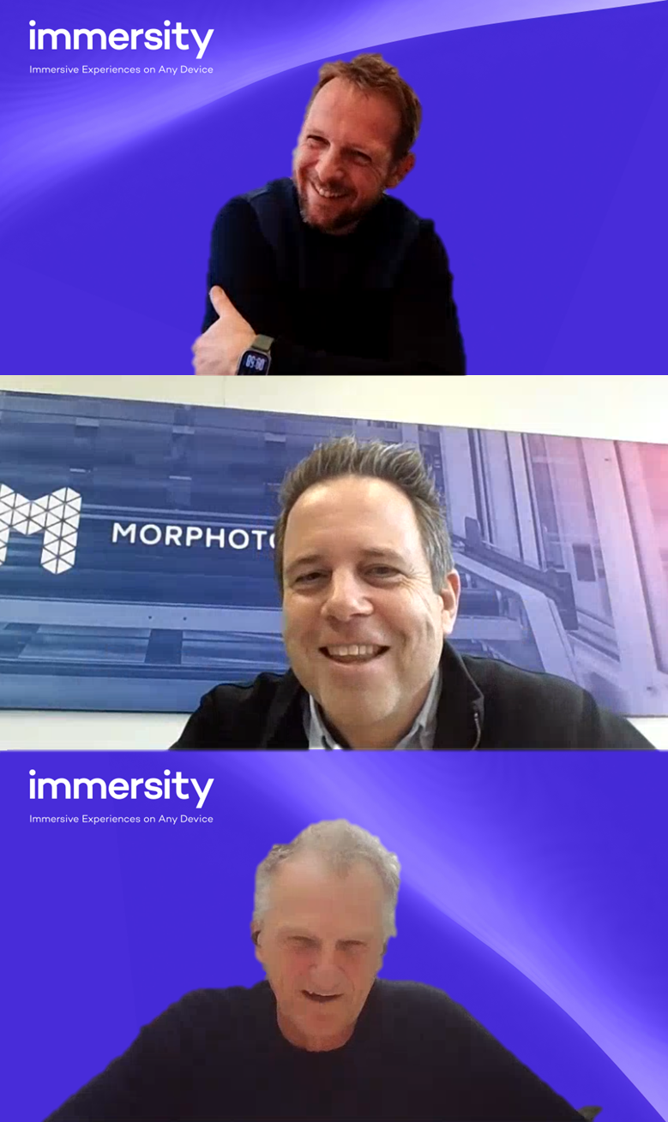
Introduction
Jochem (Leia)
Thanks, everyone, for joining. Today, we’re marking a significant milestone in our long-term partnership with Morphotonics: the installation of the Aurora 1100 Platform, the first fully automated Gen-5 roll-to-plate nanoimprint line, which enables Leia to mass-produce our Immersity Cells with unprecedented precision and scale.
We’ll revisit how this collaboration started in 2017, how we evolved through three generations of production machines, and what this means for the future of immersive displays. Joining me are Andre Krebbers, COO of Leia China, and Bram Titulaer, CDO and co-founder of Morphotonics.
1. The Beginning of the Partnership
Jochem:
Let’s start at the beginning. We’ve now worked together across three generations of machines. It was 2017 when we began collaborating, correct?
Andre (Leia):
Yes. I reached out to the Morphotonics office in 2017 because we had a very specific problem. Leia’s first-generation optical structures were made on silicon wafer masters, but we needed mass-produce displays at Gen-3 size. The display industry manufactures large glass sheets, not wafers. We needed a way to imprint nano-scale features on rigid Gen-3 glass with high uniformity — something the industry simply didn’t have.
Morphotonics was developing a roll-to-plate nanoimprint tool at that time. It matched perfectly with our need to scale nano-features from wafers to display-size glass
Bram (Morphotonics):
Both of our companies were small startups — maybe ten people on our side, twenty on yours. It was a high-trust partnership from day one, and we grew by solving difficult problems together.
2. Solving the Wafer-to-Glass Challenge
Jochem:
Can you break down the core technical challenge?
Andre:
Our nano-grating masters were made on small silicon wafers, but immersive displays require full-size glass substrates. We needed to transfer these nanostructures without distortion — no stretching, waviness, or loss of uniformity.
Morphotonics solved this by creating a large-area roll-to-plate nanoimprint process on rigid glass. It provided wafer-level precision across Gen-3 and later Gen-5 panels. That was the breakthrough. Without that scale, immersive displays would not exist.
Bram:
Most nanoimprinting solutions worldwide are limited to 300 mm wafers. From the outset, we opted for meter-scale imprinting — a technology suitable for display manufacturing. That became our core differentiation.
3. Growing Together Through Three Generations
Jochem:
From Gen-3 to Gen-5 to automation — this partnership has evolved through three major production platforms. How do you view that progression?
Andre:
We’ve built:
1. Gen-3 mass production with the Aurora 600
2. Gen-5 mass production with the Portis 1100
3. Automated Gen-5 production with the Aurora 1100
What’s remarkable is that every step required deep collaboration — weekly late-night meetings, technical alignment, redesigns, and co-development. When we need to communicate intensely, we do. Trust has always been the backbone of how we work together.
Bram:
Each tool was not just a copy of the previous one; it was an evolution based on real manufacturing data — yield, materials, flex lifetime, uniformity. Leia’s requirements pushed us forward technically, and our equipment helped Leia scale.
4. Introducing the Aurora 1100
Jochem:
Let’s focus on the Aurora 1100. You started preparing in February, and we’re now in December. What made this installation so complex?
Andre:
Our biggest concern was not disrupting active mass production. Leia China is the only manufacturer of Immersity Cells today. We had to keep the Portis line running while installing the Aurora line in parallel. We also introduced an additional process module mid-project, which required re-planning on the fly.
And of course, switching from semi-manual Gen-5 to fully automated Gen-5 is a massive step.
Bram:
From the equipment side, we coordinated six modules, multiple suppliers, and months of integration testing. We built, pre-qualified, and synchronized everything before shipment to China. Full automation means zero tolerance for surprises.
The Aurora platform is designed to be modular and reconfigurable, allowing for even late-stage changes to be absorbed.
5. Yield, Flex Life, and Cycle Time
Jochem:
Let’s talk numbers. Andre, Yield is always the key manufacturing metric, right? What improvements are you seeing?
Andre:
Yes, you don’t make money on displays without yield. With the Portis 1100, we exceeded 90% yield, and I expect Aurora to reach 90% and beyond within a few weeks.
Two factors matter most to contribute to a high yield:
1. Yield per flex
2. Flex lifetime
We achieve >1000 imprints per flex, which is excellent for mass production.
Material stability, environmental control, and clean handling are the main drivers of cosmetic yield. The Aurora 1100 improves all of these.
Jochem:
And what about the cycle time? How much does automation bring?
Andre:
We reduced the cycle time from 6 minutes to about 4 minutes in the current configuration. Once the final bottleneck — the dosing unit — is duplicated, we will achieve our target of 2 minutes in the next weeks.
6. Reliability and Support
Jochem:
Automation increases the importance of reliability. How is Morphotonics supporting this?
Bram:
Morphotonics has established a dedicated support team in China to provide service, process tuning, and upgrades. Leia isn’t just a customer – they're a long-term strategic partner. Our job is to ensure the Aurora performs every day.
7. What This Means for OEM Customers
Jochem:
How does Aurora change things for OEM partners?
Andre:
OEMs want two things: reliability and scale. With Aurora 1100, Leia can now produce:
• Up to 10 million Immersity Cells for mobile devices per year
• Up to 1 million IT displays per year
We now have a fully automated, high-yield, Gen-5 manufacturing line. That gives OEMs enormous confidence. And if we need to scale, we simply add additional Aurora lines.
8. Looking Ahead: The Future of Immersive Displays
Jochem:
Where do you see this technology going next?
Andre:
Immersive displays will become as standard as touchscreens. Our Switchable-Display technology can support everything from small 7-inch phones to 37-inch monitors whilst using the same nanoimprinting manufacturing method. That gives us a huge amount of leverage.
Future innovations will include local 3D zones, integrated touch, OLED compatibility, and advanced materials — but the underlying nanoimprint layer will still rely on Morphotonics equipment.
Bram:
For us, the Aurora proves that wafer-level nanoimprint can scale to full display sizes. It opens doors for smart glasses and other emerging applications. This partnership is a foundation for the next decade of nano-optical manufacturing.
9. Closing Thoughts
Jochem:
If we meet again in two years, what would “success” look like?
Bram:
A happy customer. If Leia is still happy, we’ve done our job.
Andre:
And if we continue this trajectory, maybe next time we’ll discuss a Gen-8.6 tool. We went from Gen-3 to Gen-5 — it’s only natural to keep moving.
Jochem:
Thank you both. This was a great conversation and a proud moment for both companies.
Keep Reading
View All


Join Our Newsletter
Stay up to date with the latest news and updates.